NORFOLK, Va. — Navy and Marine Corps medical facilities are seeing a significant decline in medical malpractice claims, a drop the Navy's top doctor says reflects a renewed emphasis on training and a more open philosophy on learning from mistakes.
For years, the Navy faced dozens of malpractice claims each year, often alleging mistakes by doctors and nurses that resulted in severe harm to military dependents receiving care at a military treatment facility.
But those numbers have fallen substantially. From a recent high of 46 claims each in 2006 and 2007, the number of legal claims dropped to 16 in 2014 and 15 in 2015, the most recent year for which data is available, Navy officials said.
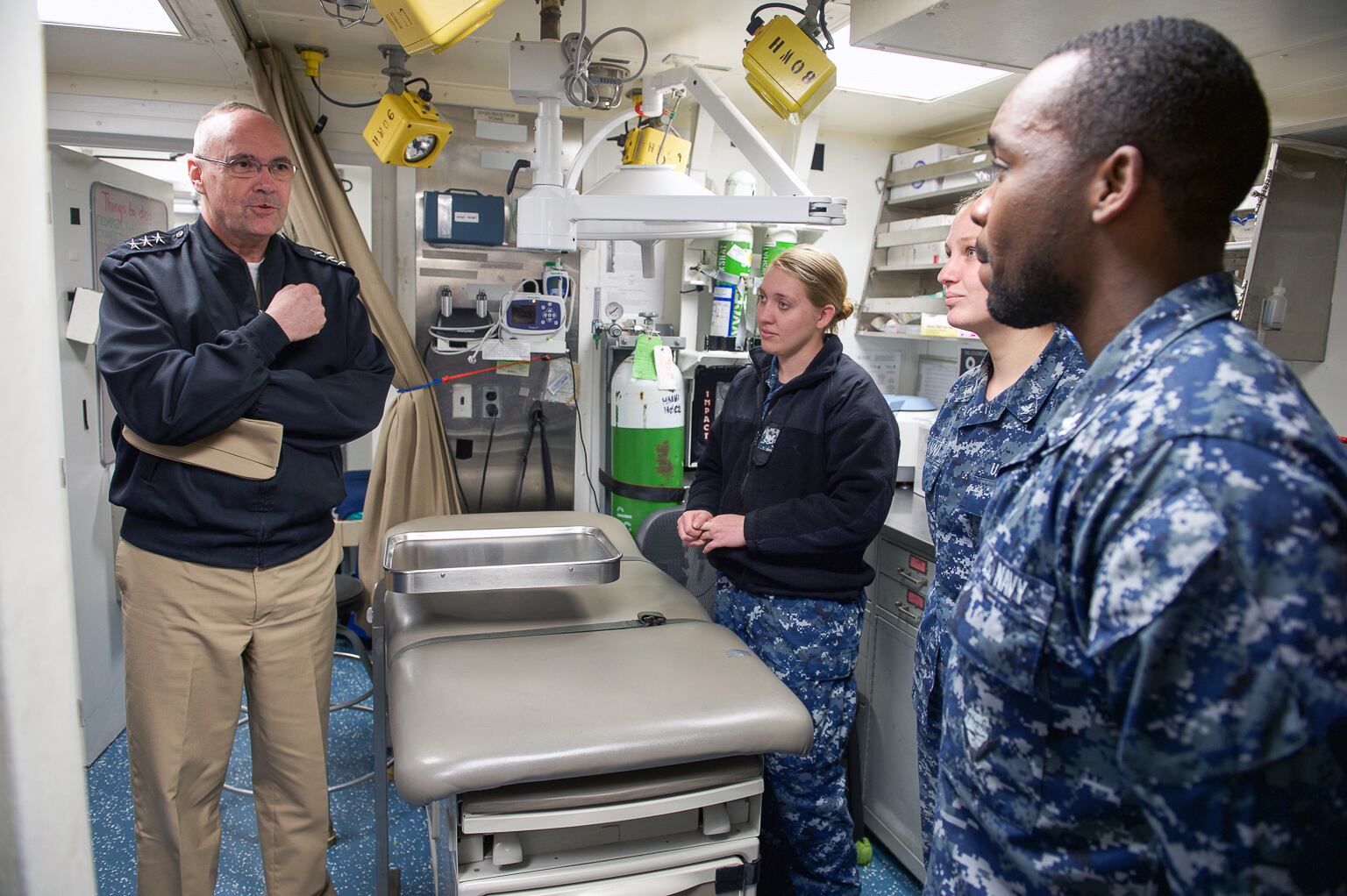
"Healthcare is inherently risky so when we have unanticipated outcomes, the entire healthcare team does a root cause analysis to examine and learn, then quickly get the word out to our health care providers," Vice Adm. Forrest Faison, the Navy surgeon general, said in a recent sit down interview with Navy Times."Our staff is trained in some of the top programs in the nation. Over the last several years, the military health system, of which Navy Medicine is a part, has called on some of the top institutions in the nation to take a hard look at our access, quality and safety," Faison said.
On average, the quality of military health care was found to be as good or better than some of the top civilian healthcare systems in the country, Faison said.
Medical malpractice claims typically come from military dependents. Active-duty service members are legally blocked from lodging malpractice claims or suing the military for any reason under a longstanding legal barrier known as the Feres Doctrine.
Headed by Faison, the Navy's medical organization is vast, operating two Medical Centers and 16 other hospitals worldwide. In the continental United States alone there are the two largest medical centers and nine other base hospitals
Navy Medicine is the single largest employer in the Navy with roughly 60,000 military and civilians on the job, today. The enlisted Navy Hospital Corps is 25,000 strong and stands as largest enlisted community in the service.
His organization provides services to the Marine Corps as well.
Faison said he’s far from declaring victory, yet he’s pleased with the improvement process underway. Faison believes the decline in malpractice claims has come from a direct effort by Navy Medicine to learn from mistakes and spread those lessons force-wide, so they won’t happen again.
"We'll go in and we'll do an analysis of what happened and we'll report that up to the Joint Commission," Faison said.
The Joint Commission is an independent, non-profit organization which accredits and certifies nearly 21,000 health care organizations and programs across the United States.
Faison said that only about 15 percent of U.S. health care institutions report what he calls "adverse outcomes" to the joint commission.
"We do with 100 percent of our adverse outcomes that qualify," he said, though he didn't specify what qualifies and what does not.
Still, he says it's how they approach this root cause evaluation that's different in how the Navy deals with these adverse outcomes today.
Their technique was borrowed, Faison said, from Alcoa Aluminum and how they approach safety incidents.
"Molten aluminum is an inherently risky business," Faison said. "They have safety accidents as well, but Alcoa has one tenth the safety accidents of anybody else in that industry."
He said they approach any incident head on and immediately, while things are fresh in everyone's minds.
"When there a safety incident, they do what's called a swarm," Faison said. "They bring together everybody that is even remotely involved in that accident within an hour and they sit down and they scrub it — they look at what could have been done better and what went wrong."
Within 12 hours of the accident, he said, a report goes up to the chief officer of that particular plant. Within 24 hours, a report goes forward to Alcoa headquarters for review.
"Ultimately, within a day, what happened is written up and pushed out across the corporation so that everybody learns quickly from other peoples' outcomes and experiences," Faison said. "We've adopted that into Navy medicine. So now, if there's an adverse outcome we do a swarm and we get the word out very quickly. That's part of our commitment to provide the best care our nation can offer."
Mark D. Faram is a former reporter for Navy Times. He was a senior writer covering personnel, cultural and historical issues. A nine-year active duty Navy veteran, Faram served from 1978 to 1987 as a Navy Diver and photographer.