Editor’s note: At least three new government websites now report on student outcomes by institution, including sites specific to the Post-9/11 GI Bill and military tuition assistance. Higher ed officials who serve military students fear that the information being reported could reflect poorly on the GI Bill in particular, making it likelier to be reduced, or eliminated, down the road. Military Times asked three veterans — who are also top leaders in higher education associations — to write commentaries on the issue.
Service members demobilizing after World War II returned to civilian life and accomplished great things for our nation, their contributions now well known thanks in large part to journalist Tom Brokaw’s 1998 book “The Greatest Generation.”
The GI Bill adopted after World War II greatly expanded veterans’ access to higher education. They enrolled in massive numbers, and colleges and universities found that student veterans’ resiliency and aspirations more than compensated for their years away from the classroom, thus making education paramount in creating “the greatest generation.”
Those veterans from World War II bear significant similarities to Post-9/11 veterans. Wars and policies have changed, but today’s veterans share the same resiliency and aspirations. This is specifically true as the comparisons relate to higher education. As a country, the higher education community has seen a significant increase in veterans attending college classes.
These increases come at a substantial price. The Department of Veteran Affairs recently reported that nearly $1.7 billion has been spent on the Post-9/11 GI Bill. With this type of spending, it’s fair for the legislators in Washington, D.C., to question the return on such an investment.
Traditionally, the education community has measured and defined success for students with data points such as graduation rates, persistence rates and retention rates — all very valid indicators of student success.
Mandated by Congress to provide outcome data on the effectiveness of the Post-9/11 GI Bill, the VA is using the very same data points of graduation, retention and course completion rates in evaluating student veteran success. In January, Student Veterans of America is expected to release data showing that student veterans are performing as well as or better than traditional students.
But can any of the traditional data points tell the whole story? Did graduation rates create “the greatest generation?”
As a veteran and higher education administrator who oversees campus veteran programs, I would suggest that it’s time to begin to expand the narrative to include career and job placement as a start.
Job placement and subsequent career sustainability data, coupled with traditional higher education data, will provide a much better view of the impact created by the Post-9/11 GI Bill. The value in obtaining a higher education credential doesn’t rest in how fast one was able to graduate nor in how many classes were completed but rather in how the knowledge is applied in the scope of one’s career.
Veterans armed with experience from their military duties, coupled with knowledge from their studies in higher education, will lead to veterans in sustainable careers — which will lead to “the next greatest generation.”
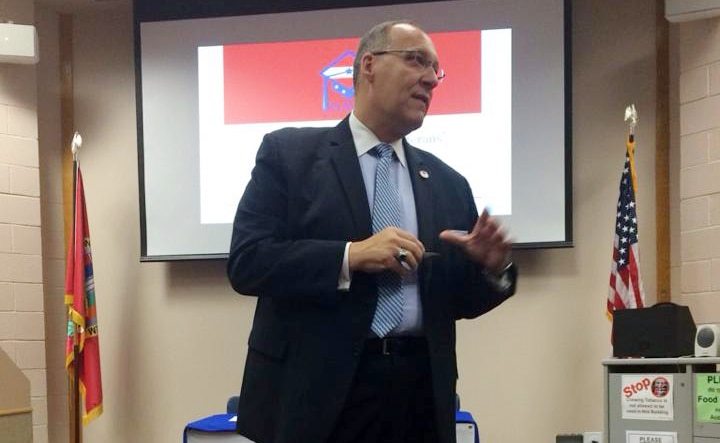
Marc Barker
is an Army veteran and immediate past president of the National Association of Veterans Program Administrators, an organization of higher education professionals. He is manager of military and veteran programs and director of the Adult Learner and Veteran Service office at Colorado State University.