The Navy’s cops are going to see their ranks grow substantially in 2015 as master-at-arms begin a manning plus-up.
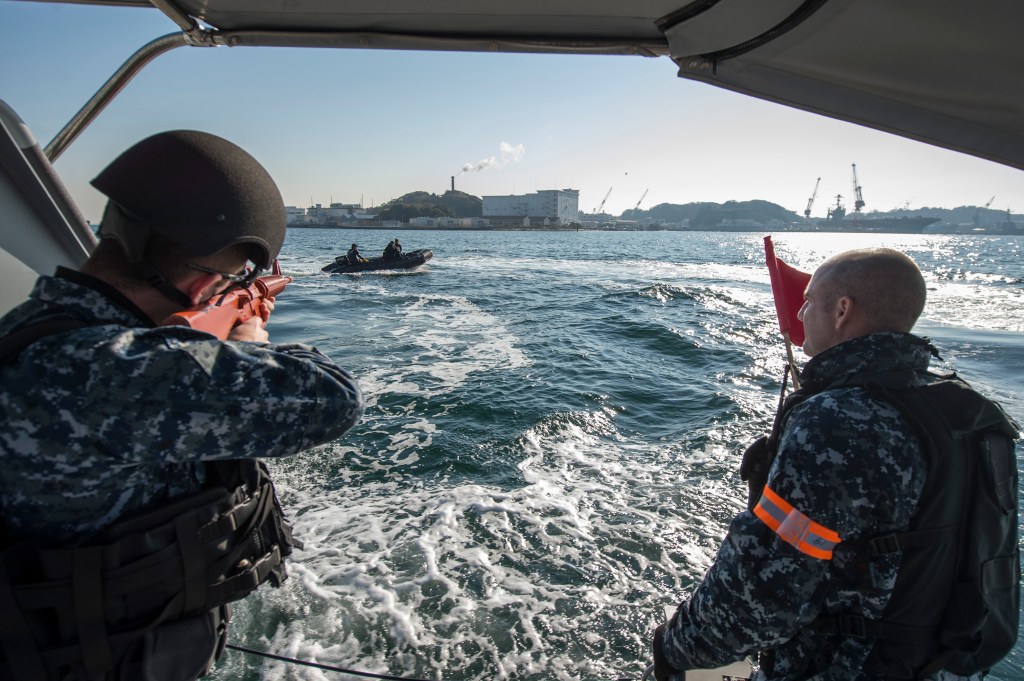
The boost stems from a decision to require all security forces on aircraft carriers to be rated master-at-arms, instead of sailors on temporary duty from other departments. The increase is due to a recent decision requiring aircraft carrier security forces be professional MAs and to stop filling half the billets with petty officers on temporary duty from other departments.
The Navy’s air boss, Vice Adm. David Buss, says the move places the security of carriers in professional hands and returns seasoned petty officers to their divisions to do the jobs the Navy trained them to do.
That’s good news for petty officers who want to stay in their rate, rather than be transferred out of their division to work in the security forces, similar to the mess “cranking” required of first-time sailors, where sailors do a stint out of their rating in their galley, chief’s mess or wardroom.
Marine detachments aboard carriers were phased out in the 1990s.
The change will boost advancement chances for MAs up to E-7, which has already seen increases in recent years. The result is that advancement in the rating up to and including E-7, which has risen in recent years, should stay around the same level and might even increase a little. In addition, Reserve sailors across many year groups can come back to active duty and retrain as MAs to fill the openings.