It’s hard to imagine how 2016 could have gone any worse for the Navy’s littoral combat ship program.
But after a string of largely unrelated engineering failures that plagued nearly every LCS in the Navy’s inventory, the surface fleet’s bosses are heading into 2017 on a mission to fix it.
In September, the Navy’s top surface warfare officer Vice Adm. Thomas Rowden ordered a radical reorganization of the LCS fleet and officials say many of those changes will start showing up in 2017. The changes were instituted to check crew errors that have either caused, or contributed to, much of the LCS’s 2016 blues.
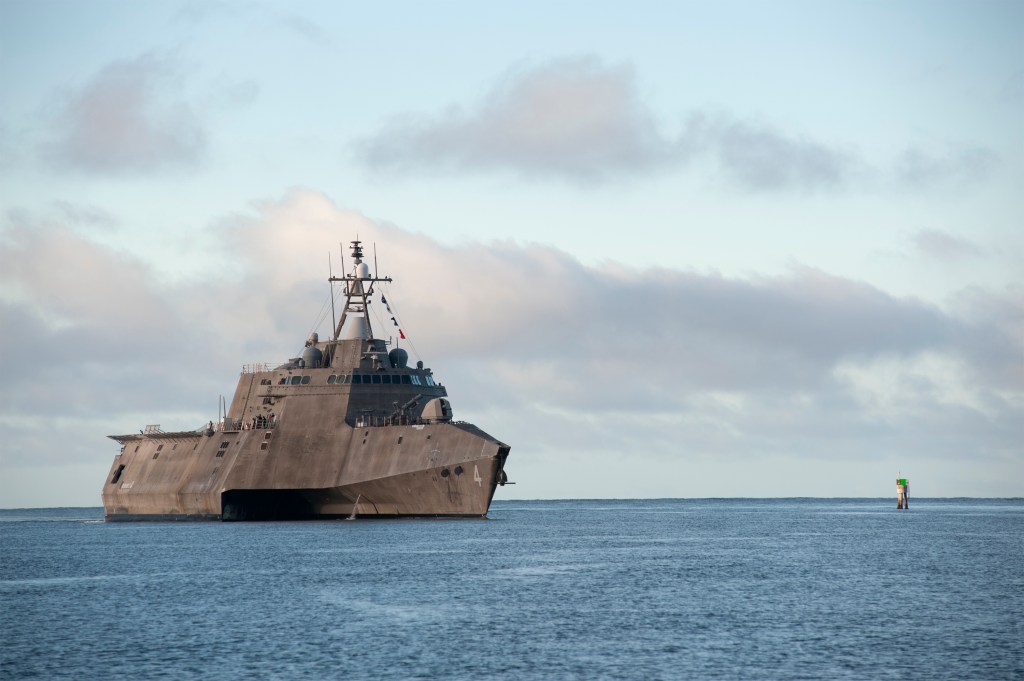
By early September, four of the six littoral combat ships then in the Navy’s fleet had suffered major engineering casualties, including all three of the mono-hulled Freedom variant ships. Since then the Navy has commissioned two more, the Jackson and the Montgomery.
Rowden ordered the LCS program to end a crewing model that assigned three crews to rotate through two ships. Under the new plan, two crews rotate on one ship, a familiar concept in the Navy known as a Blue and Gold crewing model.
The plan also kills the idea of a separate mission module crew, upending the program’s signature modularity concept where sensors and payloads could be switched out quickly to meet emerging missions. Instead, Rowden’s plan calls for a “one ship, one mission” model, where each ship will be semi-permanently assigned a mission like anti-surface warfare, mine warfare or antisubmarine warfare.
That move boosts the crew size from 50 sailors to 70 because the mission module crew will be permanently assigned. In the original concept, mission modules would have their own sailors that embark and disembark the ships with the associated hardware.
Rowden is also moving all the aluminum-hulled trimarans of the Independence class to San Diego and all the mono-hull Freedom variants to Mayport, Florida.
As the LCS fleet builds up to 28 ships by 2023, Rowden’s plan will divide the ships up into six divisions of four ships each. Each division — three per coast — will be dedicated to a specific warfare area and will be led by a commodore.
Three of the ships will be deployers with blue-and-gold crews, and one ship will remain stateside and will be manned with an experienced LCS crew certified to train the other six crews before they deploy.
In all, it means the LCS program will begin growing in 2017, as the initial goal of 40 crews by 2023 will be increased to 46 crews, or about 420 more sailors.
The Navy is banking on Rowden’s plan to start reversing the fortunes of its troubled ship class next year before Congress starts rolling it back.