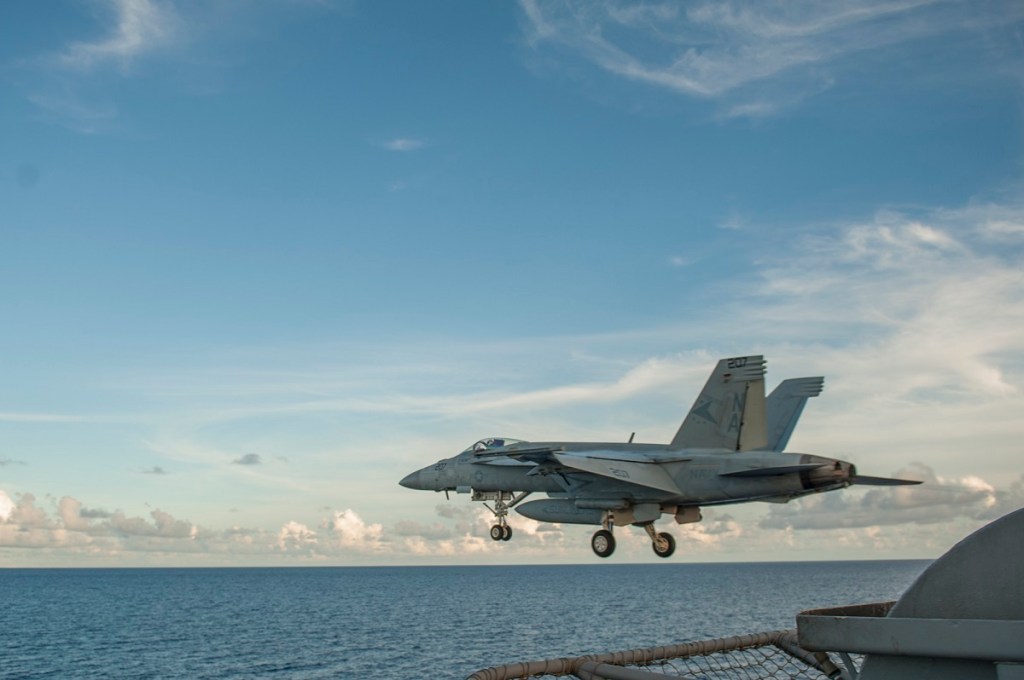
The Navy is struggling to retain experienced aviators and may need to offer aviation incentive pay and aviation bonuses to help remedy the problem, Vice Adm. Robert P. Burke told Congress in a written statement submitted to the Senate Armed Services Committee on Wednesday.
“We continue to face challenges within some historically retention-challenged communities, particularly among aviators in specific model/type/series platforms,” Burke said in his statement.
The communities at risk include strike fighter (VFA), electronic attack (VAQ) and helicopter mine countermeasure (HM) squadrons. Burke said these squadrons did not retain enough O-4 pilots to meet operational department head requirements.
The reserves are facing aviator shortages in the same communities, as well as in maritime patrol (VP) and fleet logistics (VR) squadrons.
Burke told Congress that aviation incentive pay and bonuses are the most effective incentives for retaining pilots, but the Navy is also considering non-monetary incentives like geographic stability for orders and training and educational opportunities.
Aviation readiness has been a persistent problem for the Navy. Last October, only one-third of the Navy’s Super Hornet fighter jets were fully mission-capable and ready to fight.
Last March, Burke spoke before Congress about the need to increase retention bonuses for O-4 fighter, electronic attack and mine countermeasure pilots, the same communities facing retention shortfalls today.
The Navy is not the only branch to face aviator retention challenges. In fiscal 2017, only 44 percent of eligible Air Force pilots accepted their retention bonuses and remained in the service. Last September, the Army was forced to revive its retention bonus program after struggling to hold on to seasoned pilots.
In addition to aviators, the Navy is also falling short on retaining nuclear-trained surface warfare officers, submarine officers and officers within naval special warfare, according to Burke’s statement.
In an effort to reverse this trend, the Navy requested increased retention bonuses in its FY 2019 budget proposal.