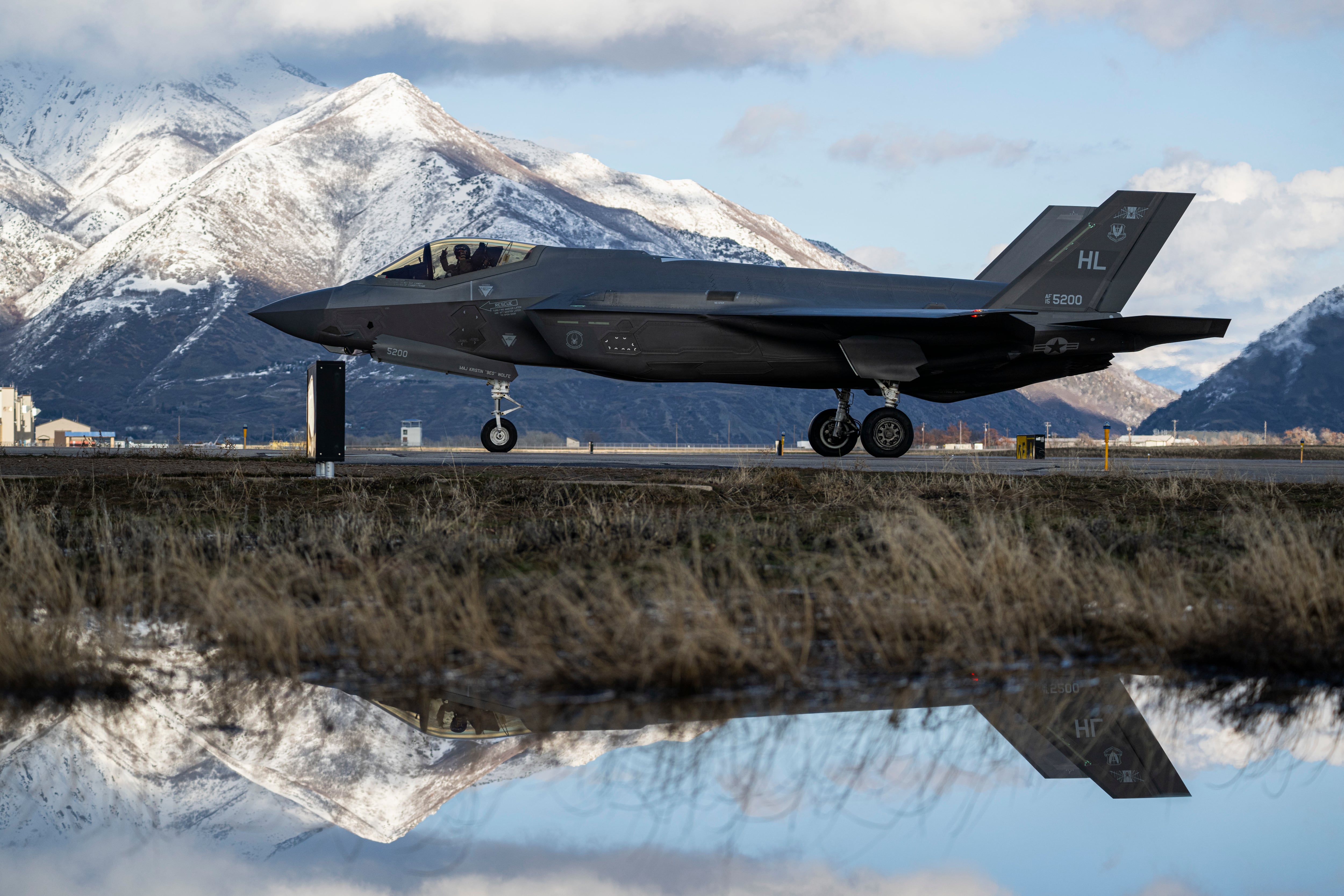
The F-35 Lightning II Joint Strike Fighter’s readiness rates continued to decline through fiscal 2025, with the fleet’s full mission capable rate falling to 25%, according to a new Government Accountability Office report released Thursday.
The mission capable rate, which measures the percentage of time aircraft can perform at least one of their tasked missions, dropped from 67% in fiscal 2021 to 44% in fiscal 2025, GAO found.
The full mission capable rate, the share of time aircraft can perform all assigned missions, slid from 38% to 25% over the same period.
Air Force officials attributed part of the fiscal 2025 drop to new jets that couldn’t perform their missions because of software delays, along with scarce parts and corrosion problems, according to the report.
“The F-35 is DOD’s most costly weapon system, but it hasn’t met performance goals and costs to sustain the aircraft continue to increase,” GAO wrote in a summary accompanying the report.
The F-35 Joint Program Office’s answer to the decline in readiness is what the office officially calls the Global Support Solution Reset. The strategy, launched in June 2025, aims for an 80% mission capable rate and a 65% full mission capable rate by 2030.
Getting there won’t come cheap: JPO estimates it will take $13.7 billion more than previously planned through fiscal 2031, money the services must request in their annual budgets.
The GSS Reset addresses concerns GAO has flagged for years, including spare parts shortages, maintenance problems and heavy contractor reliance, among other long-running issues.
Only about $2.2 billion of that total is for the GSS Reset, according to the report. The other roughly $11.5 billion covers the gap between what the services had budgeted and what F-35 sustainment actually requires.
JPO officials told GAO that readiness will likely worsen before it improves, and program documentation suggests improvements may not materialize until late 2026 or later.
GAO identified several risks that could keep the GSS Reset from succeeding.
“JPO will be reliant on the private sector to deliver more than $7 billion in additional parts and other material. But capacity constraints persist for key parts,” the report states.
A 2025 study by Lockheed Martin, which builds the F-35 and leads its sustainment alongside engine maker Pratt & Whitney, found 48 parts that the supplier base can’t produce enough of, including canopies, which GAO has previously identified as a top driver of grounded jets.
Costs keep climbing, too, threatening the services’ ability to pay for the Reset. By the mid-2030s, GAO projects the services will face a roughly $1.2 billion annual gap between what their F-35s cost to sustain and what they say they can afford.
Those estimates may understate the problem. GAO noted the fiscal 2027 projections were developed before Operation Epic Fury and may not capture the costs associated with additional flight hours.
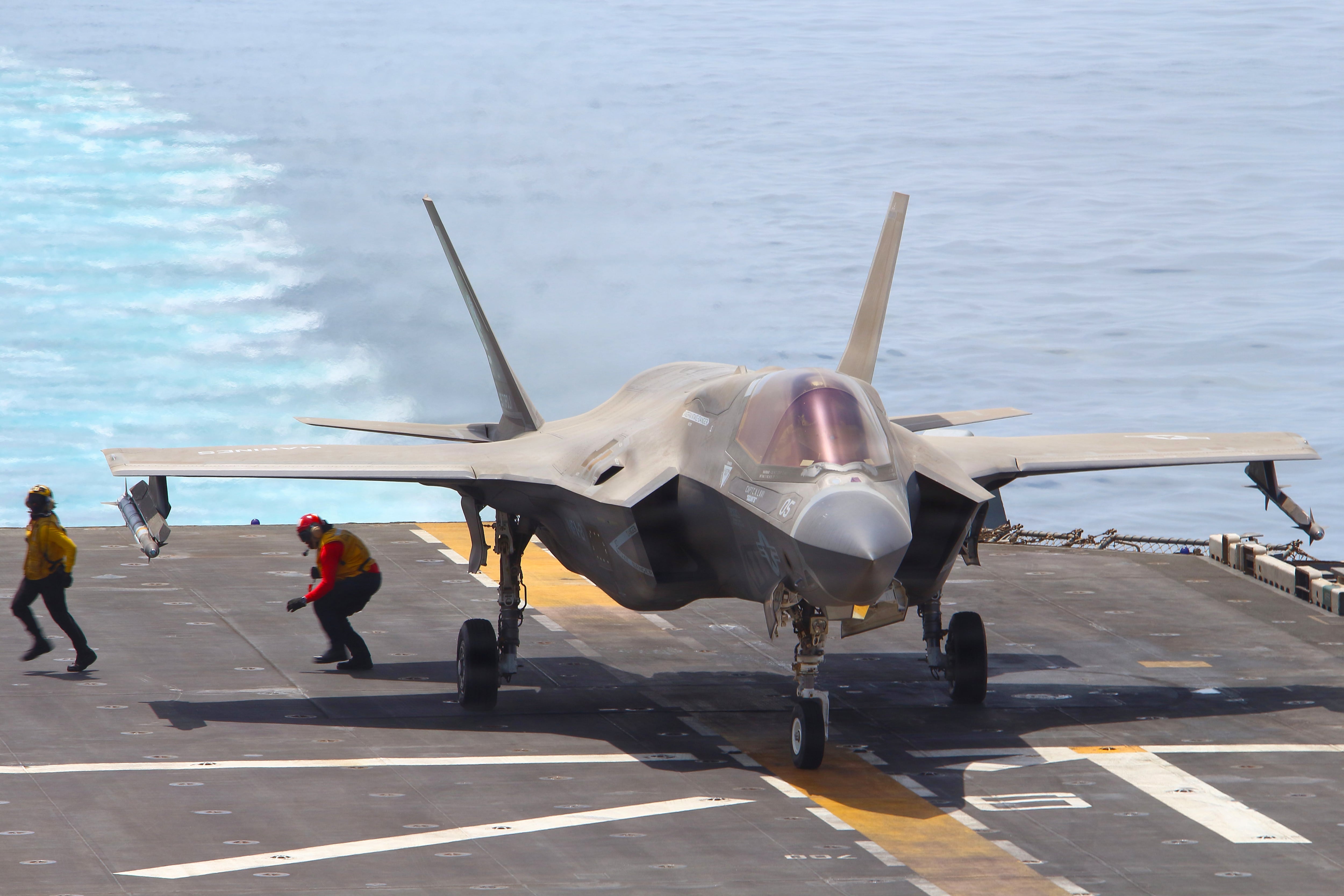
Incentives spent on readiness haven’t delivered as intended, GAO found, echoing a Pentagon Inspector General audit published in December.
From 2020 through 2023, the program office paid Lockheed more than $114 million of roughly $269 million in available incentive fees meant to improve full mission capable rates and parts supply, even as both metrics generally stagnated or worsened.
Lockheed’s incentive fees were tied to readiness thresholds. In 19 of 39 performance periods, the JPO and Lockheed adjusted the recorded full mission capable rate upward, citing factors outside the company’s control, such as service-caused delays, which qualified the contractor for higher payments. Had fees been paid on the raw rates alone, GAO estimated Lockheed would have earned roughly half as much.
Pratt & Whitney, the program’s other prime contractor, has met its engine sustainment targets since 2022 after fixing problems GAO flagged in earlier reviews, the report noted.
“Lockheed Martin continues to partner with the Joint Program Office and our industry partners to ensure we are delivering efficient and effective sustainment for the warfighter,” a Lockheed Martin spokesperson said in a statement to Defense News. “We have recently invested more than $2 billion in advanced funding to accelerate spare parts to increase readiness rates across the F-35 fleet.”
The F-35 Joint Program Office concurs with the report’s findings and fully supports its three recommendations, a spokesperson told Defense News.
“Through our Global Support Solution Reset initiative, the JPO remains focused on achieving our 2030 readiness goals and ensuring strict fiscal accountability for every sustainment dollar spent,” the spokesperson said.
GAO also found the F-35 JPO could not produce consistent records of its incentive fee payments. It calculated fees using a formula that differed from the contract without documenting the change, and over the course of GAO’s review, provided three different versions of its incentive fee spreadsheet.
JPO officials told GAO they abandoned the contracted formula because it overstated Lockheed’s performance, and the corrected formula they used paid the company an estimated $3.7 million less than the flawed one would have.
GAO found the incentive problems extend to the current contract, covering 2025 through 2028, which includes no incentives tied to full mission capable rates at all, instead rewarding parts supply metrics with targets GAO found fall below the program’s own goals.
“Until JPO ensures the future use of incentives better achieves desired performance, it risks rewarding contractor performance that does not help meet program goals,” GAO stated.
GAO wants the Pentagon to do three things: build risk mitigation plans for efforts like the GSS Reset, covering technical data access, industry capacity, affordability and alignment with service goals; rethink how it structures contract incentives, possibly including penalties for poor performance; and build a reliable system for tracking what it pays in incentive fees and why.
GAO has now made 46 recommendations on F-35 sustainment since 2014. As of March 2026, the Pentagon had implemented 14.
The Pentagon did not provide formal comments on the report but said in draft comments that it agreed with the recommendations, according to GAO.
Despite the program’s readiness troubles, the F-35 remains the backbone of America’s fighter fleet. The Pentagon operates more than 800 of the jets and plans to buy about 1,700 more by the mid-2040s, with lifetime U.S. sustainment costs estimated at $1.6 trillion as of 2024.
Michael Scanlon is a defense journalist covering air and space warfare. A former U.S. Air Force A-10 crew chief, he has supported land and sea programs for the U.S. Army, Navy, Marine Corps and Coast Guard.