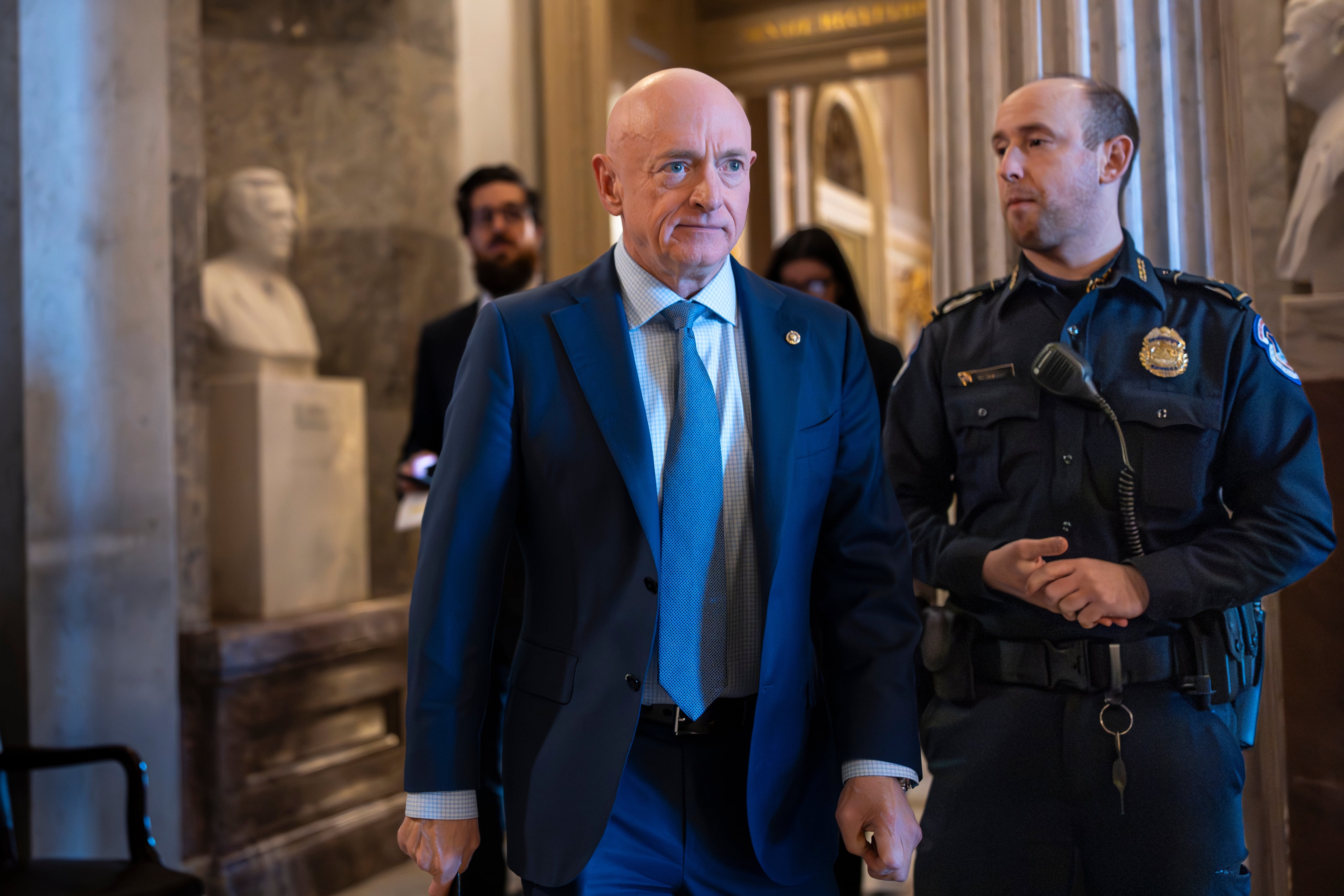
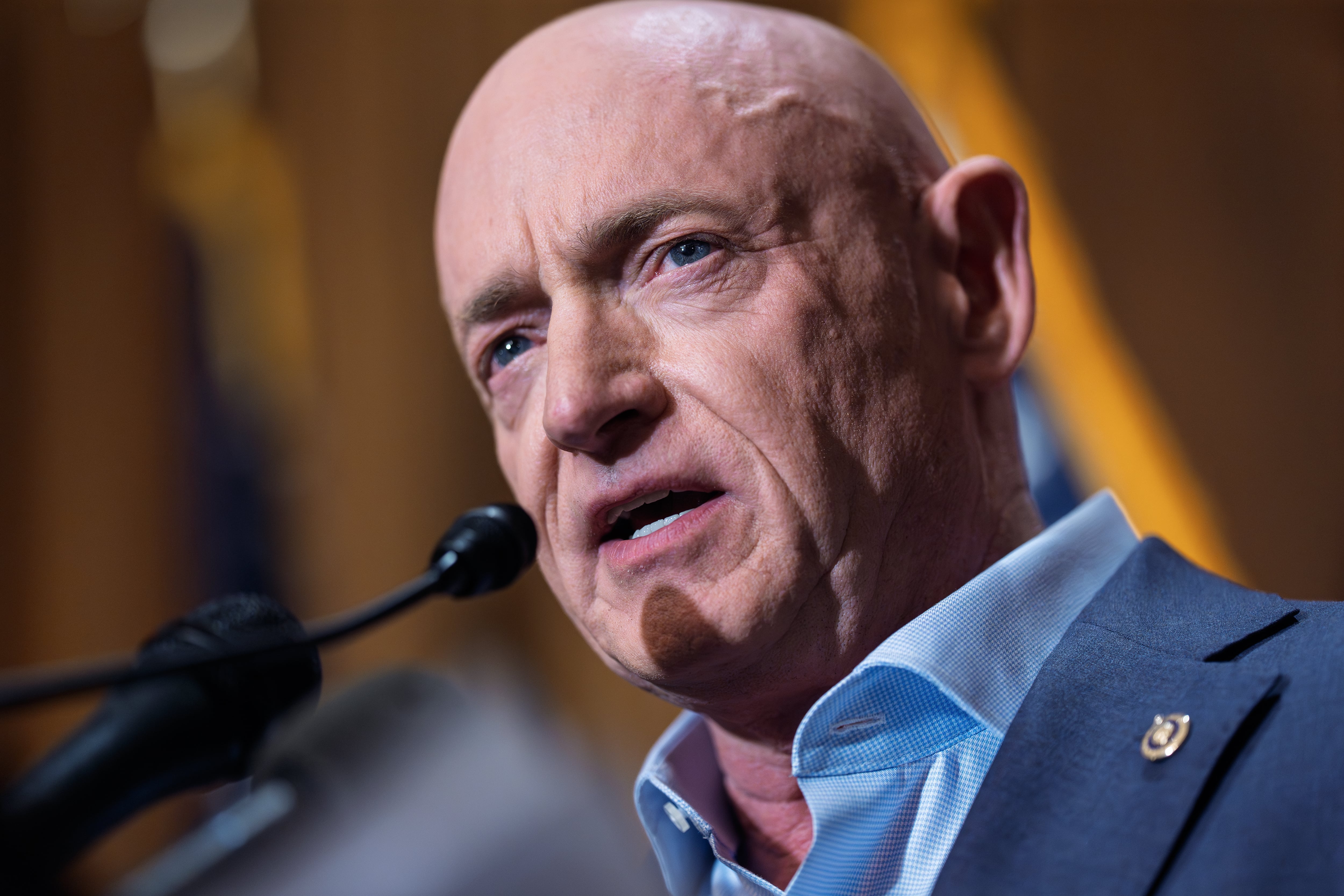
Over 40 retired generals, admirals and other former senior military officers signed an amicus brief on Tuesday in support of Sen. Mark Kelly, D-Ariz., as he faces an investigation from the Pentagon over alleged sedition.
The accoladed list of individuals, which includes two recent secretaries of the Army and Navy, said that the Pentagon’s escalating attacks against Kelly could negatively impact veterans who want to publicly speak out about subjects important to them and the American public.
“To chill the speech of retired military service members would not only infringe on their individual First Amendment rights, but also impoverish public debate on critical issues relating to our military and its role in domestic and foreign affairs,” the amicus brief read.
Kelly and several other Democratic representatives released a video on Nov. 18 pleading with military personnel to refuse illegal orders amid ongoing U.S. military strikes against alleged drug-carrying vessels in the Caribbean and eastern Pacific Ocean.
Trump immediately skewered the video on his social media platform, Truth Social, labeling its participants seditious and calling for them to be arrested and put on trial.
Shortly after, the Pentagon announced that it was opening up an investigation into Kelly, citing its ability to recall retired service members to active duty for a court-martial.
In a Jan. 5 post, Defense Secretary Pete Hegseth announced that the Pentagon was censuring Kelly and initiating a reduction in his retirement pay. Kelly, in turn, is suing the Pentagon in an attempt to block the censure.
RELATED
Beau Tremitiere, lead lawyer on the brief and deputy director of impact for non-profit Protect Democracy, said the Pentagon’s attempt at censorship is deeply unlawful.
“This administration is routinely taking steps that undermine our national security, the rule of law, and healthy civil-military relations,” Tremitiere said in an emailed statement to Military Times. “Now they’re doubling down on these missteps by trying to silence dissenting voices most trusted by the public on these very issues — retired military leaders with firsthand experience and decades of hard-earned wisdom."
Veteran involvement in public discourse is a pivotal part of governing and democracy, according to the signers of the brief, and former service members’ right to speak is protected by the Constitution’s First Amendment, as well as by the Uniform Code of Military Justice.
Specifically, the amicus brief states that the Defense Department stipulates in the DOD Law of War Manual the instruction that Kelly echoed in the video: “An order that violates the law of war is unlawful and must not be obeyed.”
The Manual for Courts-Martial also emphasizes that a service member cannot use the defense that they were “simply following orders” if they knew that the initial order was unlawful, per the brief.
Signatories of the brief note that disagreements with the current administration and Defense Secretary Pete Hegseth could invite retaliation, a concern based on the Pentagon’s decision to investigate Kelly.
Kelly’s words also didn’t violate the UCMJ, the brief said.
Hegseth’s letter of censure said Kelly’s speech in the Nov. 18 video constituted “conduct unbecoming an officer,” which would require courts to prove that his words presented a “clear and present danger,” per the UCMJ. The brief argues that the courts will be unable to draw this link, since Kelly was restating military law.
The Pentagon’s letter of censure also states that Kelly’s words brought “discredit upon the armed forces” and “prejudice[d] good order and discipline.” However, this will require the courts to provide evidence of a “palpable connection” between Kelly’s words and an observable negative impact on military missions or the military environment. The brief implies there is none.
Punishing Kelly would call into question the constitutional protection for any service members who might publicly disagree with an administration’s policy, the legal document states.
Retired U.S. Navy Adm. Charles “Steve” Abbot, another signatory who served as Deputy Homeland Security Advisor under President George W. Bush, said he has spoken to many service members who are now reluctant to speak out for fear of reprisal because of what they were seeing transpire between Kelly and the Pentagon.
Though he views the investigation into Kelly as groundless, Abbot hopes the outcome or potential litigation will make it abundantly clear that “veterans, like all citizens, are entitled to their First Amendment views, even when those views are not the same as a sitting administration.”
Riley Ceder is a reporter at Military Times, where he covers breaking news, criminal justice, investigations, and cyber. He previously worked as an investigative practicum student at The Washington Post, where he contributed to the Abused by the Badge investigation.