Sailors at 56 U.S. Navy installations will be the beneficiaries of about $375 million in barracks improvements projects to address “critical living conditions,” Navy officials announced Thursday.
About $300 million will go into major projects to benefit around 2,000 sailors and Marines at six bases with larger, more urgent needs.
The remaining $75 million has been identified for 95 smaller projects at 50 installations, including some overseas. They include projects such as kitchen modernizations; heating, ventilation and air conditioning system upgrades; flooring replacements and new furniture.
Officials said they received about $375 million in the One Big Beautiful Bill Act for Navy unaccompanied housing work. The effort is driven by Defense Secretary Pete Hegseth’s Barracks Task Force initiative and the Navy’s “Sailors First” principle, officials said.
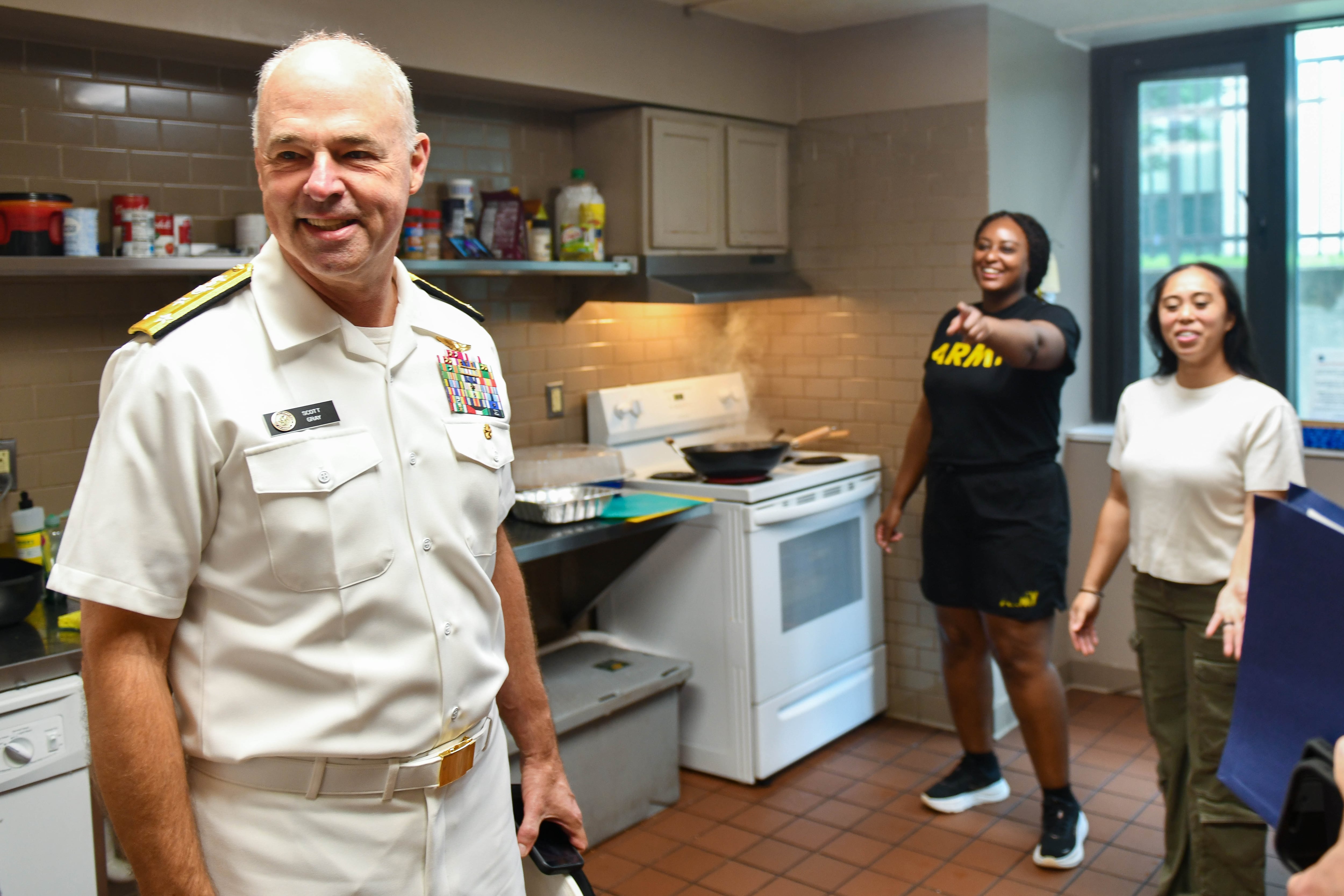
“Providing safe, comfortable and clean housing is not optional. It is a responsibility we owe to every sailor who volunteers to serve,” Vice Adm. Scott Gray, commander of Navy Installations Command, said in the announcement.
“This is not a one-time fix, but a sustained commitment,” Gray said.
“We are dedicated to continuous improvement and ensuring our sailors have the quality housing they deserve throughout their careers,” he added.
The six larger projects will focus on longer-term maintenance, restoration and modernization projects ranging from improving energy efficiency and renovating bathrooms to replacing HVAC, plumbing and electrical distribution systems.
Those six projects were prioritized based on “executability and impact for our sailors,” Destiny Sibert, a spokeswoman for the Navy Installations Command, said.
She said these improvements were largely identified after Gray ordered his regional commanders to personally inspect all unaccompanied housing facilities where sailors were living in their areas of responsibility last spring.
The six larger projects are:
- Naval Base Kitsap, Washington: Major repairs to Keppler Hall, which housed 304 sailors but is now uninhabitable after a fire and water damage in August. A contract has been awarded and is on a fast track to start, Sibert said.
- Naval Support Facility Indian Head, Maryland: Modification of a barracks occupied by an unknown number of Marines in the Joint Chemical Biological Incident Response Force. The project includes structural, mechanical and electrical upgrades and modernization of the fire suppression system.
- Naval Air Station Oceana, Virginia: Complete renovation of student housing for 336 residents at the Center for Naval Aviation Technical Training. The project will include a new roof, as well as HVAC and plumbing work, mold remediation and flooring replacement, among other things.
- Joint Base Pearl Harbor-Hickam, Hawaii: Full modernization of Building 1489, including HVAC, roofing, plumbing and electrical upgrades, renovation of shower areas, upgrading kitchens and other interior improvements and providing storage areas for the 96 residents.
- Naval Air Station Oceana Dam Neck, Virginia: Renovation of Building 550, which houses about 338 students in the Marine Corps Intelligence School. The project will include structural repairs, heating repairs, a new sewer system, new flooring, bathroom improvements, in-room refrigerators and microwaves.
- Joint Expeditionary Base Little Creek-Fort Story, Virginia: Improvements at Shields Hall for the 638 residents, to include replacing the HVAC system and suspended ceilings, as well as other repairs.
A schedule for completion of the projects is not available because of the contracting process.
For years, troops across the services have complained about conditions in barracks, and the Government Accountability Office has reported on the poor conditions, lack of oversight and deferred maintenance that reached critical stages.
“For too long this department has neglected its responsibilities to set and maintain the appropriate standards for barracks, and that ends now,” Hegseth said in an Oct. 6 memo directing the formation of the Barracks Task Force.
Karen has covered military families, quality of life and consumer issues for Military Times for more than 30 years, and is co-author of a chapter on media coverage of military families in the book "A Battle Plan for Supporting Military Families." She previously worked for newspapers in Guam, Norfolk, Jacksonville, Fla., and Athens, Ga.