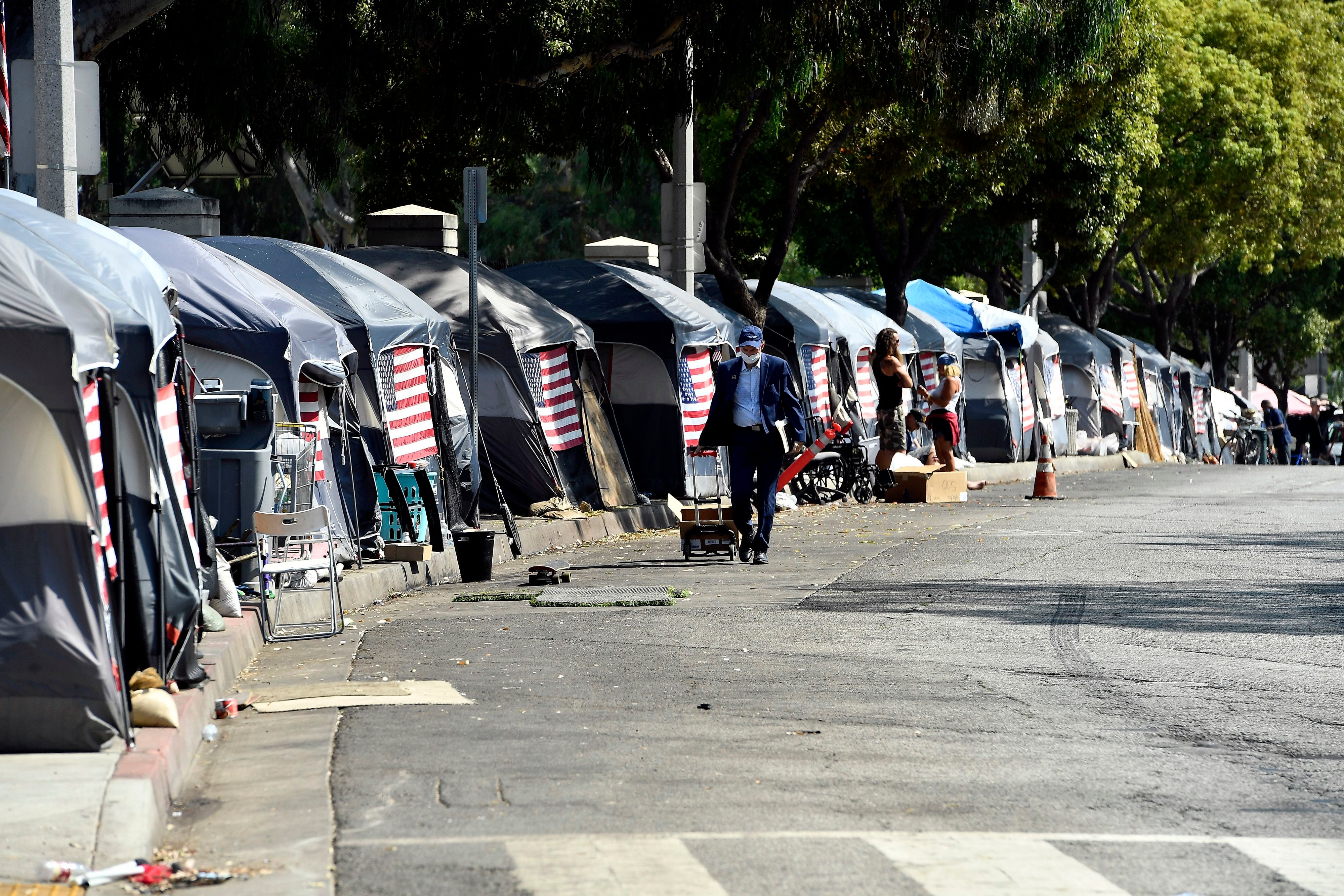
A federal appeals court this week upheld a federal district court ruling ordering the Department of Veterans Affairs to dramatically expand housing for unhoused, disabled veterans on its West Los Angeles campus.
In a decision filed Dec. 23, a three-judge panel of the Ninth U.S. Circuit Court of Appeals affirmed that the VA violated the Rehabilitation Act by failing to provide supportive housing for “unhoused veterans with serious mental illness or traumatic brain injuries,” according to documents in the case of Powers v. McDonough.
This violation, in turn, meant veterans were denied meaningful access to critical health care services, the judges ruled.
The class-action lawsuit was brought by unhoused veterans and advocacy groups who argued that decades of land-use agreements with private entities diverted the sprawling West Los Angeles VA campus from its intended purpose of housing and caring for disabled veterans.
“The United States Department of Veterans Affairs’ mission is ‘[t]o fulfill President Lincoln’s promise to care for those who have served in our nation’s military and for their families, caregivers, and survivors,” Circuit Judge Ana de Alba stated in the court documents, citing VA’s stated goal.
“This class action lawsuit, and its numerous appeals, demonstrates just how far the VA has strayed from its mission,” de Alba continued. “There are now scores of unhoused veterans trying to survive in and around the greater Los Angeles area despite the acres of land deeded to the VA for their care. Rather than use the West Los Angeles VA Grounds as President Lincoln intended, the VA has leased the land to third party commercial interests that do little to benefit the veterans.”
The panel upheld the district court’s finding that the VA’s lack of adequate housing placed veterans at “serious risk of institutionalization,” violating the Supreme Court’s Olmstead decision. It also ruled that the VA’s practice of contracting with housing developers who impose income limits that count veterans’ disability benefits as income was discriminatory under the Rehabilitation Act.
The court affirmed the district court’s authority to order sweeping relief to remedy those violations, including potentially requiring the VA to construct 1,800 permanent supportive housing units and 750 temporary units on the campus.
The panel said the district court did not abuse its discretion in imposing those requirements as relief for discrimination.
However, the appeals court reversed the district court’s ruling that an 1888 deed creating the campus established a judicially enforceable charitable trust obligating the VA to manage the land exclusively for veterans’ housing.
Because that charitable trust claim was the sole basis for voiding a lease with the University of California, Los Angeles, the panel dismissed UCLA’s appeal as moot and vacated injunctions affecting UCLA’s lease and services, the opinion said.
The panel also vacated portions of the district court’s judgment voiding leases with Brentwood School, an independent day school, and Bridgeland Resources, an oil and gas company, which relied on the charitable trust theory.
Still, the court separately held that Brentwood’s lease and Bridgeland’s revocable license violated the West Los Angeles Leasing Act and the Administrative Procedure Act because they did not principally benefit veterans.
The court ruled that the district court went too far in barring the VA from renegotiating those unlawful agreements, saying that aspect of the injunction exceeded what was necessary to remedy the violations.
The case will now be returned to the district court to enter a revised judgment consistent with the decision of the appeals court.