Fought on the night of June 9-10, 1965, the Battle of Dong Xoai was, as was often the case in the Vietnam War, hard to pin down as to the winner. One thing is certain, however. It produced two Medals of Honor — and one had the unique distinction of being a Seabee.
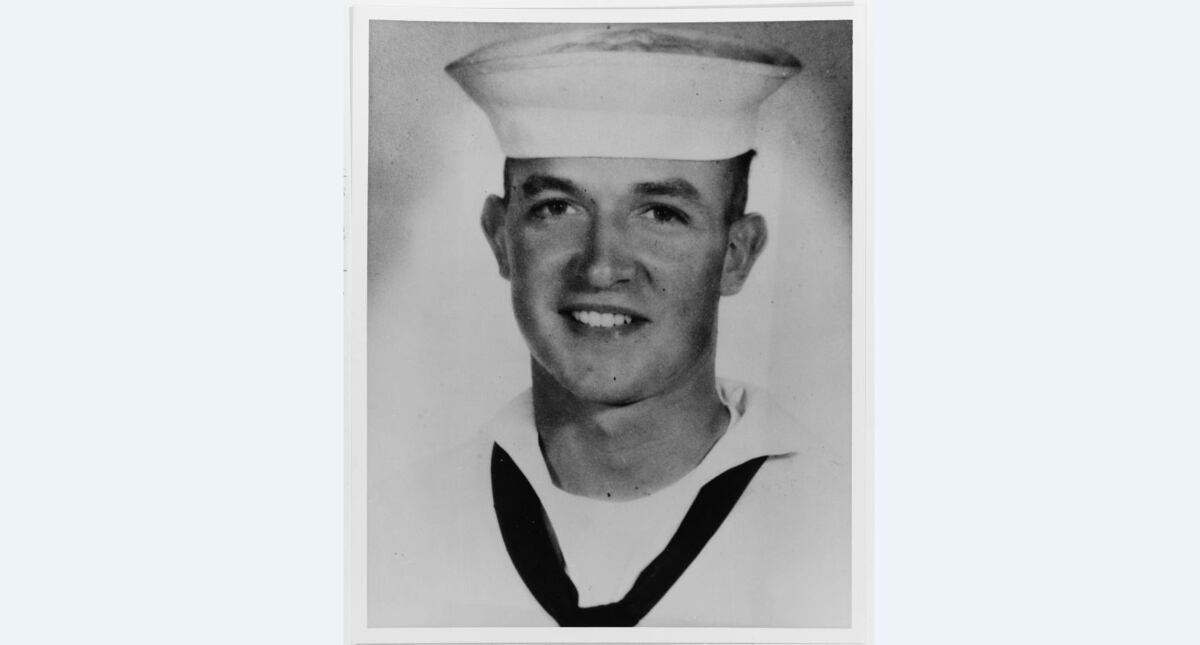
Marvin Glen Shields was born in Port Townsend, Washington, on Dec. 30, 1939. After high school his family moved in 1958 to Hyder, Alaska, where he worked in a gold mining project for the Mineral Basin Mining Company.
On Jan. 8, 1962, he enlisted in the Navy, choosing the multi-training of a construction battalion member, or Seabee. After training at Naval Air Station Glynco, Georgia, and Port Hueneme, California, he graduated as a naval construction mechanic in May 1963, and served his first assignment at Okinawa from Nov. 18 to Sept. 1964.
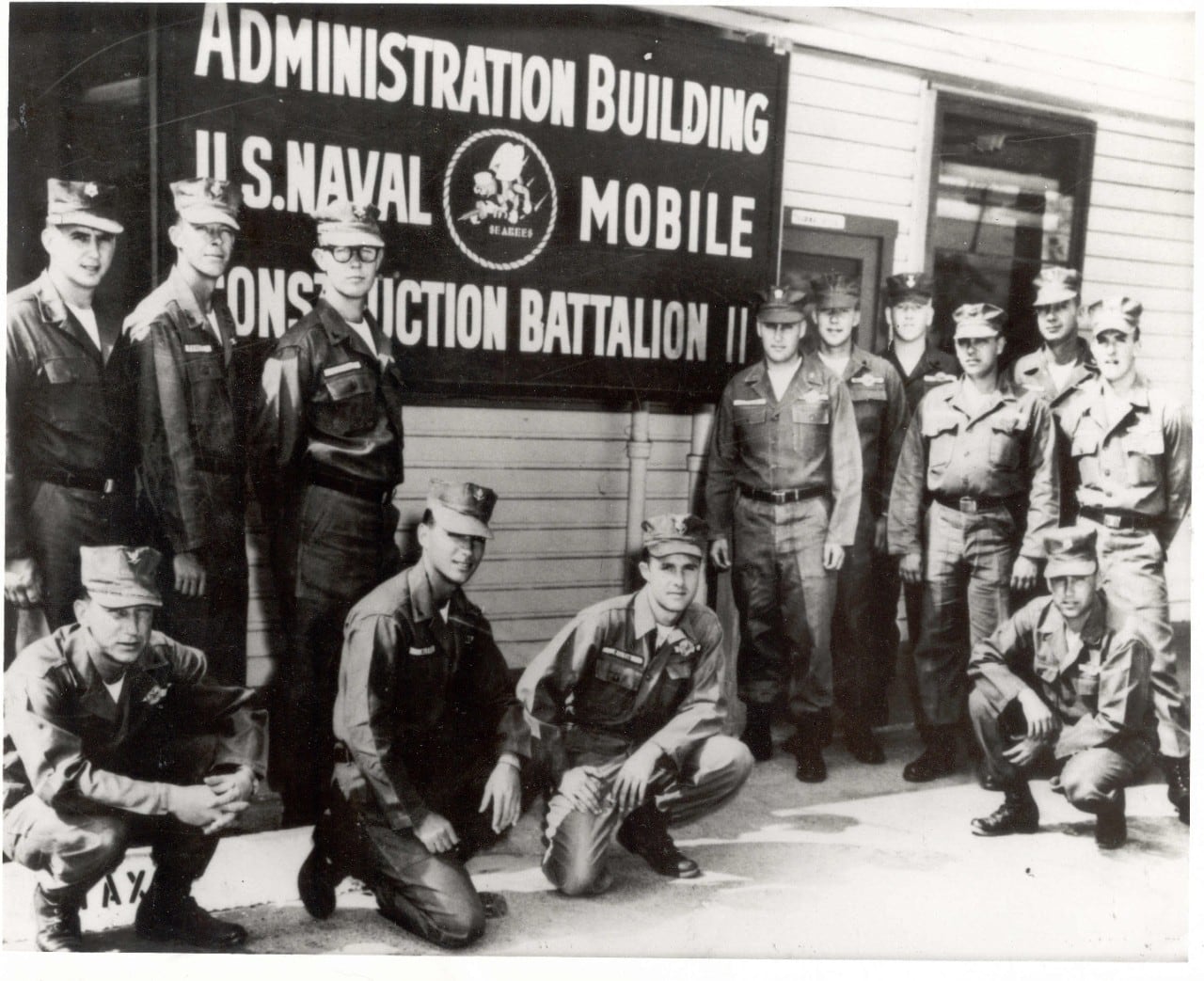
On Nov. 1, 1964, Construction Mechanic 3rd Class Shields swerved into harm’s way when he was assigned to Seabee Team 1104 of Naval Construction Battalion 11.
After final training, on Jan. 22, 1965, he and his nine-man unit transferred to Saigon, Vietnam, just 10 days later. From there, Team 1104 was transported 55 miles north to Dong Xoai, where it joined the 11 members of Army Special Forces Team, A-342, 5th Special Forces Group (Airborne), 1st Special Forces, in constructing a fortified Special Forces camp.
Further reinforcing the area were 200 local anti-communist Montagnards and 200 soldiers of the Army of the Republic of Vietnam (ARVN).
The area was also crawling with enemy troops, ranging from local guerrillas to full-fledged infantry units trained and organized in North Vietnam before returning south. The latter included the reinforced 272nd Regiment, about 2,000 strong, which on the night of June 9, 1965, set out to eliminate the compound at Dong Xoai.
Soon, every defender at Dong Xoai was fighting for his life.
As described in his citation, that included Shields, who was wounded early in the fighting as was the commander of Team 1104. In spite of that: “Shields continued to resupply his fellow Americans who needed ammunition and to return the enemy fire for a period of approximately three hours, at which time the Viet Cong launched a massive attack at close-range with flame throwers, hand grenades and small-arms fire.”
Though wounded a second time during this attack, Shields assisted in carrying a more critically wounded man to safety, then rejoined the fighting for another four hours.
Then a call came up from 2nd Lt. Charles Quincy Williams who, with the wounding of his commander, had taken charge of the Special Forces troops. He needed a volunteer to join him in a sally to eliminate a well-placed Viet Cong machine gunner whose accuracy was endangering the lives of all personnel in the compound.
Without hesitation, Shields volunteered for this hazardous mission. Proceeding toward their objective with a 3.5-inch rocket launcher, Williams and Shields closed to approximately 500 feet and Williams succeeded in destroying the machine gun emplacement.
As the Green Beret and the Seabee made their way back to their defensive positions, however, Shields was hit a third time and Williams twice more.
After a grueling 14-hour siege, Dong Xoai’s defenders were finally evacuated. In the process, Williams eventually recovered from his injuries. Shields was not so fortunate, dying before he reached Saigon. On June 19, he was buried in the presence of a Marine honor guard in Gardiner Cemetery, Washington.
Although the 272nd Regiment finally overran Dong Xoai, the VC knew enough not to hold it long against an enemy with complete air superiority. As far as casualties went, postwar statistics testify to the overnight siege’s butcher bill.
The Americans claimed to have killed 300 VC and captured 104 weapons, while Vietnamese records claimed the loss of 134 men killed and 290 wounded. On the South Vietnamese side, 416 of the ARVN and Montagnards stationed in and around the compound were killed and 176 wounded and 233 missing.
Of the Americans, nine Special Forces troops were killed and of the Seabees, besides Shields, Petty Officer 2nd Class William C. Hoover was killed in the VC’s opening mortar attack. All seven surviving Seabees were wounded.
On Sept. 13, 1966, Shields’ family traveled to the White House, where President Lyndon B. Johnson awarded him a posthumous Medal of Honor. Later, on June 5, 1966, Charles Q. Williams was alive to receive his Medal of Honor. Shields’ name was later christened to the guided missile frigate USS Marvin Shields (FF-1066), as was Camp Marvin Shields Construction Battalion Support Base in Okinawa.