Latest ""
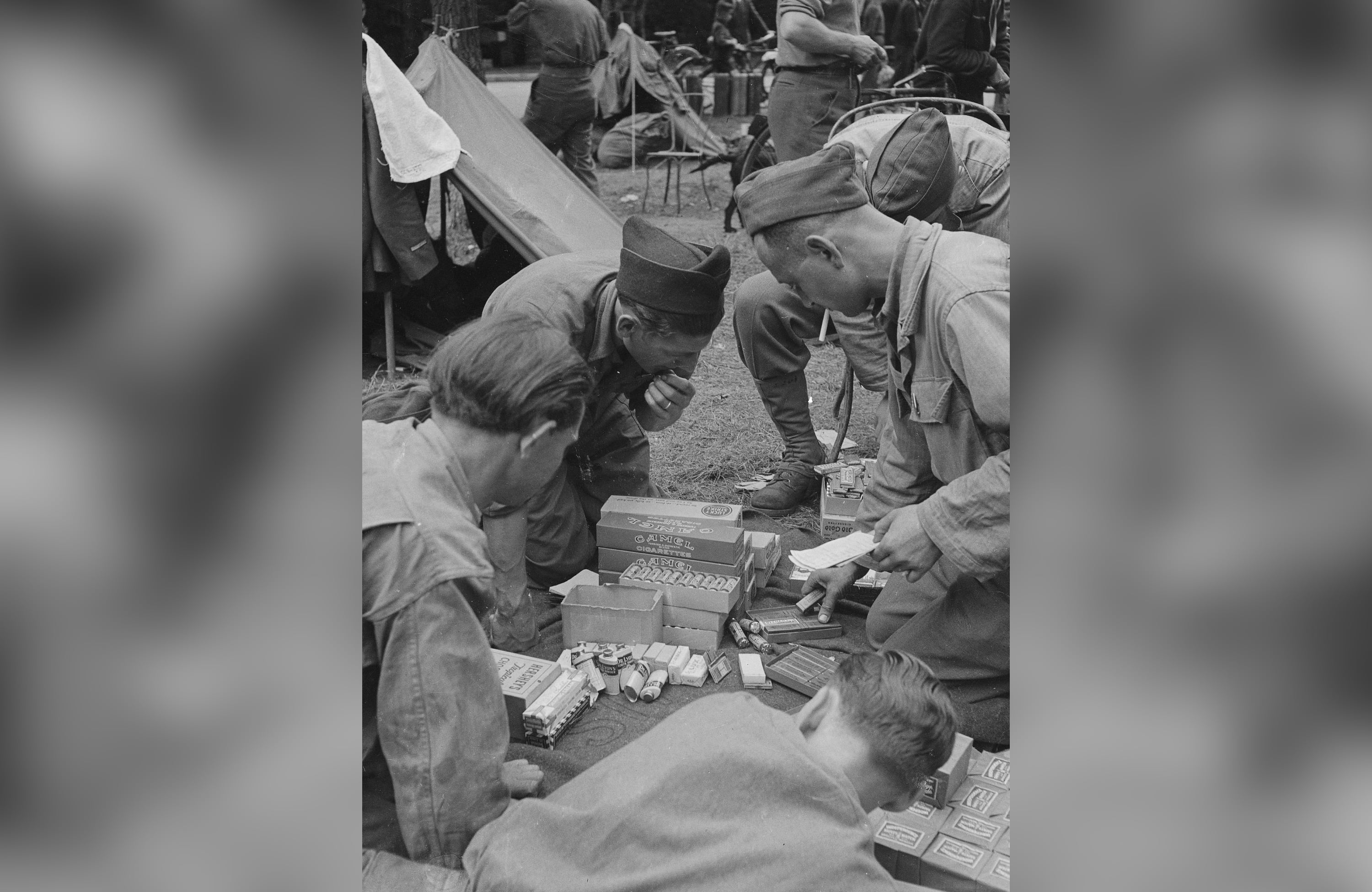
How chocolate became one of the US military’s most important WWII rations
In 1937, the Army approached the Hershey Company with a blunt request: Create a high-calorie chocolate bar that's intentionally unpleasant.
By Clay Beyersdorfer
Waging war against the troll farms
The U.S. military has the capability, the willingness and, perhaps for the first time, the official permission to preemptively engage in active cyberwarfare against foreign targets.
By Benjamin Jensen, American University School of International Service, and Brandon Valeriano, Marine Corps University
Navy leader in charge of housing resigns
Phyllis L. Bayer's resignation comes at a time of mounting complaints about black mold and other poor conditions in privatized housing at military bases.
By Carl Prine
Reburial planned for ensign killed during Pearl Harbor raid
Fair winds and following seas, Ensign Charles M. Stern Jr.
Remains of ensign killed at Pearl Harbor identified
Pentagon officials say the remains of an American sailor from upstate New York who was killed in the Japanese attack on Pearl Harbor have been identified.
New uniforms revealed! Fashionable and FREE!
Another round of wear-testing is slated for July, but if it pans out this two-piece uniform could become optional issued clothing when you report on board ship — no trips to Navy Exchange, no money out of your annual uniform allowance.
By Mark D. Faram
Navy air traffic controller honored for emergency landing aid
Last October, the sailor guided Boyd Williams through an emergency landing on U.S. 45 in Mississippi's Clarke County after Williams’ plane experienced engine failure.
That time American planes fought American planes
The strange story of Task Force 34.
By John W. Lambert, Aviation History Magazine
A Seabee on Iwo Jima: The men who drove cranes and cats also served
A Seabee remembers what building and fighting were like on the bloody island of Iwo Jima.
By Jack Cornwell, World War II Magazine
Reporter’s Notebook: Goodbye to a pair of American icons
A reporter recollects meeting the pair of participants in one of the 20th century's most famous photos.
By Mark D. Faram
Desegregating America’s blood supply to save wounded service members
It was not until 1950 that the Red Cross stopped requiring the segregation of so-called “Negro blood.”
By Thomas A Guglielmo, George Washington University